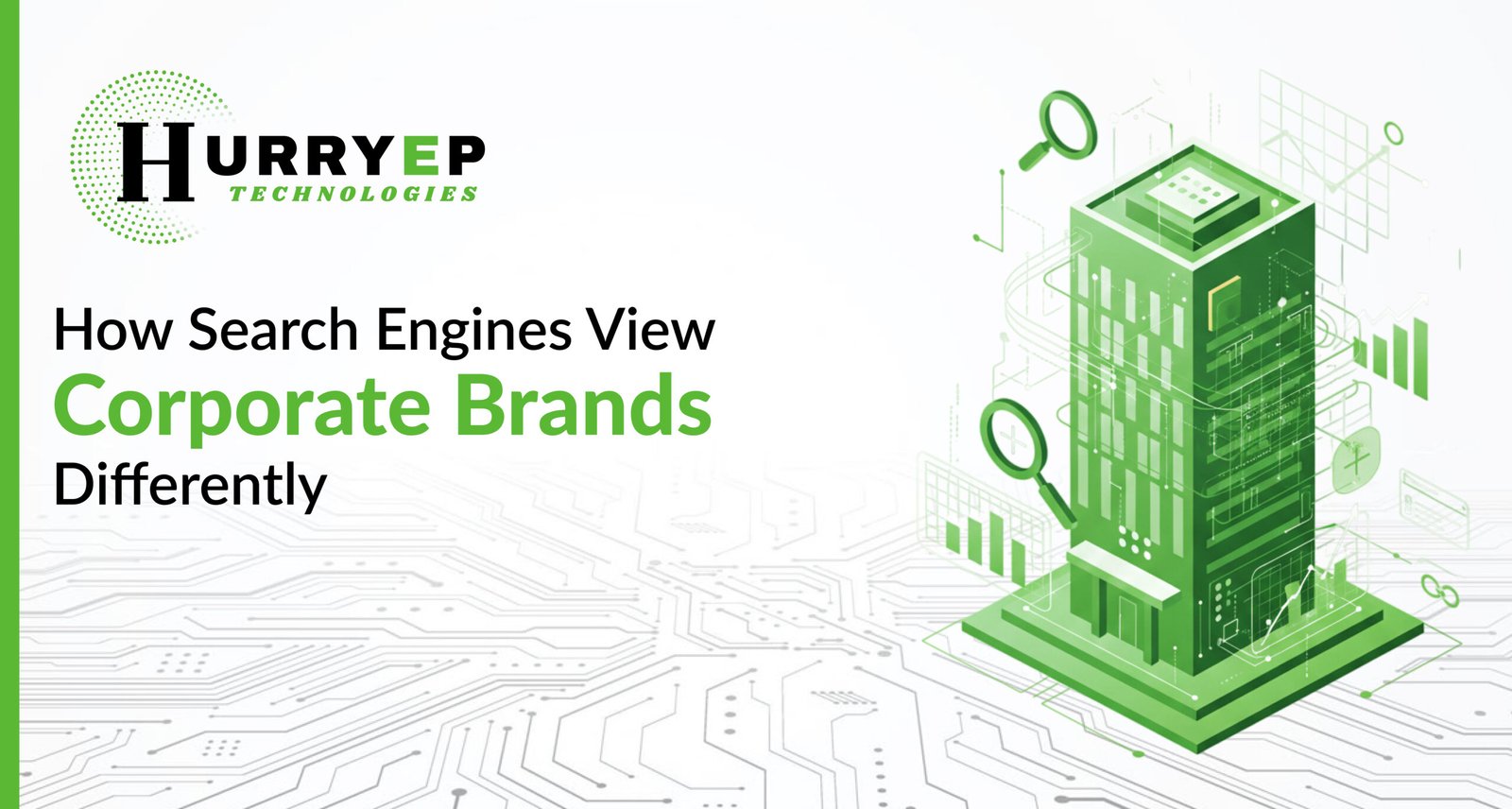
Search engines do not evaluate all websites equally. As businesses grow, their digital footprint, brand signals, and user expectations change—and search engines adapt their evaluation accordingly. Corporate brands are assessed through a different lens compared to small businesses or local websites. This difference directly impacts rankings, visibility, and long-term search performance.
Understanding how search engines view corporate brands differently is critical for businesses operating at scale or planning to scale. Corporate SEO is built around this exact reality.
When users search for corporate brands, their intent is rarely informational alone. It is evaluative and trust-driven. Search engines analyze this intent closely and adjust results accordingly.
High-volume keywords commonly associated with corporate intent include:
Search engines recognize that users typing these queries are not casual browsers. They are decision-makers, stakeholders, or procurement teams validating credibility. As a result, Google prioritizes brands that demonstrate authority, consistency, and scale—factors typically associated with corporate websites.
Corporate SEO aligns content, structure, and messaging with this intent, ensuring search engines understand both what the brand offers and who it is meant for.
Search engines evaluate corporate brands beyond keywords and backlinks. Authority signals play a much larger role.
These signals include:
Corporate websites are expected to explain not just what they do, but how they operate, who they serve, and why they are credible. Thin or purely promotional content weakens trust signals, even if rankings temporarily exist.
Search engines treat corporate brands as entities, not just websites. The more clearly an entity is defined, the stronger its visibility becomes across competitive keywords.
For corporate brands, trust is algorithmic.
Search engines look for:
Corporate SEO strengthens entity recognition by ensuring consistency across pages, structured information, and topic authority. This helps search engines confidently associate the brand with its industry, services, and expertise.
When trust signals are weak or fragmented, search engines hesitate to rank corporate websites aggressively—especially for high-competition, high-volume keywords.
Search engines expect corporate brands to lead conversations, not just participate in them.
Unlike smaller sites that can rank with short, focused content, corporate websites are evaluated on:
This is why generic blogs or isolated service pages often fail at scale. Corporate SEO prioritizes pillar content, supporting clusters, and structured narratives that demonstrate market leadership.
Search engines reward brands that educate users comprehensively, not brands that simply chase keywords.
One of the biggest differences in how search engines view corporate brands is expectation of consistency.
Corporate websites are evaluated on:
Any inconsistency—outdated pages, conflicting messaging, or uneven quality—creates friction in how search engines assess reliability. At scale, SEO mistakes compound faster.
Corporate SEO mitigates this by implementing governance, content frameworks, and long-term optimization strategies designed for large websites.
Search engines do not just rank pages; they assess brands.
As businesses grow, search engines expect more clarity, authority, and responsibility from their digital presence. Corporate brands are held to higher standards because they influence more users, decisions, and industries.
Corporate SEO exists to meet those expectations. It bridges the gap between brand scale and search credibility, ensuring that as visibility increases, trust and authority increase with it.
For businesses competing in high-value markets, understanding how search engines view corporate brands differently is no longer optional—it is foundational to sustainable growth.
Get started with Corporate SEO today.
Contact Us : +91 8675651401
Visit Us : https://hurryep.com
E mail : info@hurryep.com