
Every business owner reaches a point where manual tasks start eating into hours that should be spent on growth. Answering the same customer questions, chasing leads, and updating spreadsheets can quietly consume an entire workday. This is where Best business automation steps in, replacing repetitive manual effort with smart, connected workflows that run in the background.
This guide covers what business automation means, why it matters, which processes deliver the fastest returns, mistakes to avoid, and how tools like Nano DM are reshaping customer engagement on Instagram.
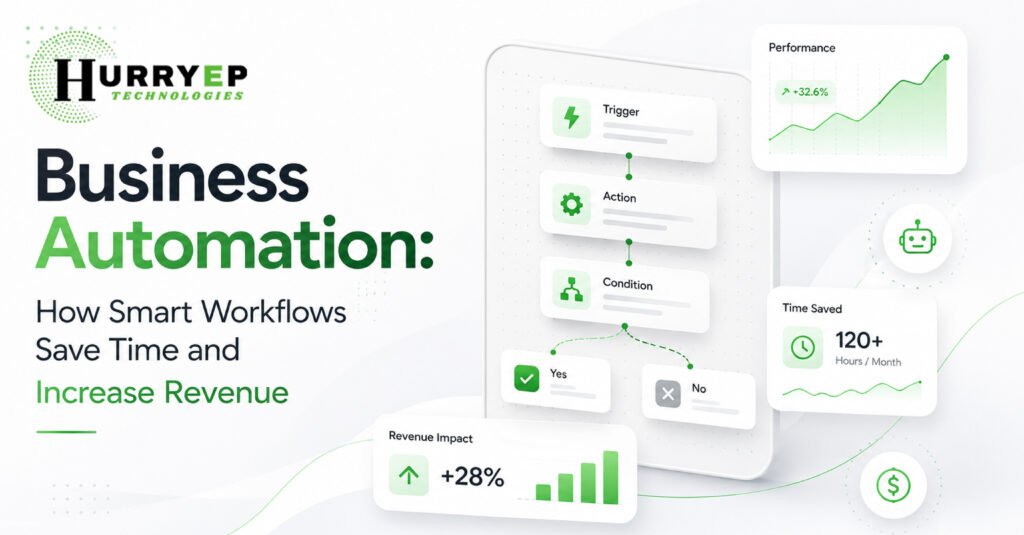
Business automation uses technology to perform repetitive tasks without manual intervention, freeing your team for higher-value work. It ranges from simple task triggers to advanced AI automation capable of understanding context.
At its core, workflow automation connects the tools your business already uses — CRM, email, messaging, payments — so information flows between them automatically instead of being copied by hand.
Common categories include:
Customers expect instant responses, and competitors are already using automation to deliver on that expectation. Falling behind doesn’t just cost efficiency — it costs customers.
Automation isn’t about replacing people — it’s about freeing your team to focus on strategy and relationships instead of repetitive admin work.
Route new leads into your CRM and trigger instant follow-up before a competitor reaches out first.
Automated replies to common questions cut wait times and free staff for complex issues.
Instagram DM automation ensures no enquiry goes unanswered, day or night.
Automated booking and reminders reduce no-shows and eliminate manual back-and-forth.
Automatic invoice generation and reminders improve cash flow without manual tracking.
Triggered, segmented sequences nurture leads based on behavior without daily manual effort.
Process | Manual Cost | Automation Benefit |
Lead follow-up | Hours per day | Instant response, higher conversion |
Customer support | High staff dependency | 24/7 availability |
Instagram DMs | Easily missed | Consistent engagement |
Appointment booking | Repetitive coordination | Fewer no-shows |
Invoicing | Manual errors | Faster payments |
Working with an experienced automation partner typically produces faster, more reliable results than piecing together disconnected tools.
AI automation is moving beyond simple triggers toward systems that understand context, intent, and sentiment. Instead of sending a pre-written reply, AI-powered workflows can interpret a message and respond meaningfully.
This is especially visible in lead generation automation, where AI can qualify leads, answer nuanced questions, and hand off complex conversations to human staff seamlessly. Businesses that adopt AI-driven automation early will likely maintain an edge over those relying solely on manual processes.
Instagram has become a primary sales and enquiry channel for many businesses, but manually managing DMs at scale is nearly impossible. This is the gap Nano DM, an Instagram DM automation solution developed by Hurryep Technologies, was built to close.
Nano DM automates Instagram Direct Messages so no enquiry goes unanswered, regardless of volume or time of day. With Nano DM, businesses can:
Nano DM is built for: e-commerce stores, retail businesses, educational institutions, real estate companies, healthcare clinics, restaurants and cafés, travel agencies, coaches and consultants, service-based businesses, and influencers.
Beyond convenience, Instagram DM automation drives real results — generating more qualified leads, improving response time, increasing customer satisfaction, scaling conversations without added staff, and enhancing marketing campaign performance.
It uses technology to handle repetitive tasks automatically, improving speed, accuracy, and consistency across operations.
Lead follow-up, customer support, social media engagement, scheduling, and invoicing typically see the fastest results.
Yes — tools like Nano DM are especially valuable for businesses without staff to monitor messages full-time.
No. It handles high-volume, repetitive interactions, while humans remain essential for complex conversations.
Simple workflows can launch within days; multi-tool integrations may take a few weeks.
E-commerce, retail, education, real estate, healthcare, hospitality, travel, and service businesses all see strong results.
Business automation has moved from a competitive advantage to a baseline expectation. Smart workflows save time, reduce errors, and directly increase revenue by ensuring no lead or enquiry falls through the cracks. The question is no longer whether to automate, but which processes to automate first.