
Search behavior is changing faster than most businesses can keep up with. People no longer just type queries into Google — they ask questions to ChatGPT, Gemini, and Perplexity, expecting direct, conversational answers. This shift has sparked one of the most important conversations in digital marketing today: GEO vs SEO.
Understanding the difference between these two disciplines — and how they complement each other — is now essential for any business that wants to stay visible in 2026. This guide breaks down what each approach means, how they differ, and why combining them gives your business the strongest possible search presence.
Search Engine Optimization (SEO) is the practice of improving a website so it ranks higher in traditional search engine results pages, primarily Google and Bing. It focuses on technical structure, content quality, and authority signals that search engines use to rank pages.
Core SEO activities include:
SEO has existed for decades and remains the foundation of organic visibility, driving traffic through clicks on ranked links.
Generative Engine Optimization (GEO) is the practice of optimizing content so it gets referenced, cited, or summarized by AI-powered platforms like Google AI Overviews, ChatGPT, Gemini, and Perplexity AI. Instead of competing for a ranked position on a results page, GEO focuses on becoming the source an AI model pulls from when generating an answer.
This is a meaningfully different goal. Traditional AI search engines don’t show a list of links — they synthesize information from multiple sources into a single conversational response, often without the user ever clicking through.
Core GEO activities include:
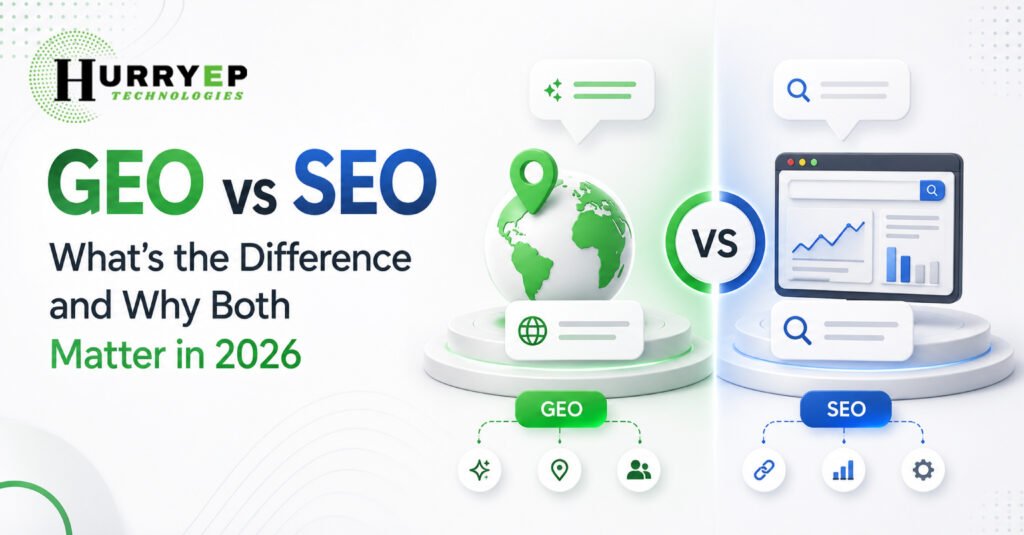
While GEO and SEO share some foundations, their goals, platforms, and success metrics differ significantly.
Factor | SEO | GEO |
Purpose | Rank higher on search results pages | Get cited or summarized in AI-generated answers |
Search Platforms | Google, Bing | ChatGPT, Gemini, Perplexity, Google AI Overviews |
Ranking Factors | Backlinks, keywords, technical SEO | Authority, clarity, structured answers |
Content Strategy | Keyword-optimized pages | Direct, answer-first content |
User Intent | Click-through to a website | Instant answer within the AI response |
Optimization Techniques | On-page SEO, link building | Structured data, topical depth, clear formatting |
Traffic Sources | Organic search clicks | AI-generated citations and brand mentions |
Success Metrics | Rankings, organic traffic, CTR | Citation frequency, AI visibility, brand mentions |
Benefits | Long-term organic traffic growth | Visibility in the fastest-growing search channels |
Best Use Cases | Product pages, local listings | FAQs, guides, definitional content |
Rather than viewing generative engine optimization as a replacement for SEO, the smartest strategy treats them as complementary. AI models frequently draw from well-established, high-authority sources — the same sources that strong SEO helps build over time.
In short, SEO builds the foundation of trust and authority, while GEO ensures that foundation gets surfaced across the newer, AI-driven channels shaping how people find information.
The rise of AI-powered search has fundamentally altered how users discover information and how businesses need to think about visibility.
This shift doesn’t diminish the importance of content optimization — it expands what optimization needs to account for.
Combining GEO and SEO effectively comes down to consistent, high-quality practices that serve both people and machines.
The future of SEO is increasingly intertwined with how AI models retrieve and present information. As AI Overviews, conversational assistants, and generative platforms become primary discovery tools, businesses that adapt early will maintain a meaningful advantage over those that wait.
This doesn’t mean traditional search is disappearing — it means the definition of “ranking” is expanding to include visibility within AI-generated answers, not just links on a results page.
SEO focuses on ranking web pages in traditional search results, while GEO focuses on getting content cited or summarized within AI-generated answers.
No. GEO complements SEO rather than replacing it, since strong SEO foundations help build the authority that AI systems rely on when selecting sources.
Write clear, answer-first content, use structured headings, add schema markup, and build topical authority around your subject matter.
GEO can increase brand visibility and citations even without direct clicks, making its impact more about awareness and trust than raw traffic numbers.
Track citation frequency, brand mentions within AI responses, and referral traffic from AI platforms alongside traditional organic metrics.
Not necessarily. Well-structured, comprehensive, people-first content typically performs well across both traditional search and AI-powered platforms.
The debate over GEO vs SEO isn’t about choosing one over the other — it’s about recognizing that search has expanded beyond a single format. Businesses that combine strong technical and content-driven SEO with GEO-focused structuring will be best positioned to stay visible, whether users are scrolling through Google results or asking an AI assistant directly.