

The way consumers discover brands has undergone a remarkable transformation over the past two decades. Not long ago, television commercials, newspaper advertisements, billboards, and word-of-mouth recommendations played a dominant role in influencing purchasing decisions. Today, consumers operate in a vastly different environment—one shaped by search engines, social media platforms, online reviews, and artificial intelligence.
Modern consumers are no longer passive recipients of marketing messages. Instead, they actively research, compare, evaluate, and validate information before making decisions. This shift has fundamentally changed how businesses attract attention, build trust, and generate demand.
For organizations seeking sustainable growth, understanding these changing patterns is no longer optional. It is essential for remaining relevant in a highly competitive digital marketplace.
For generations, consumer discovery followed a relatively predictable path. Businesses created advertisements, purchased media space, and delivered messages to broad audiences. Brand awareness was largely driven by exposure, repetition, and reputation.
Traditional marketing channels offered limited options for consumers seeking additional information. A recommendation from a friend, a television commercial, or a newspaper advertisement often influenced purchasing decisions directly.
However, the rise of the internet fundamentally changed this relationship. Information became instantly accessible. Consumers gained the ability to research products, compare providers, and access reviews before engaging with businesses.
Today, discovery is increasingly self-directed. Rather than waiting to encounter brands through advertisements, consumers actively seek information based on their needs and interests.
This shift has reduced the influence of interruption-based marketing and increased the importance of discoverability. Businesses must now ensure they are visible wherever consumers begin their search for information.
The evolution of consumer discovery reflects a broader change in power dynamics. Information is no longer controlled by brands alone. Consumers now have greater control over how, when, and where they engage with businesses.
The modern customer journey rarely begins with a direct interaction with a business. Instead, it often starts with a search query, a social media recommendation, or a piece of content encountered online.
Search engines remain one of the most influential discovery tools available today. Consumers use platforms like Google to find answers, compare alternatives, and evaluate options. Whether searching for products, services, or industry expertise, search has become the starting point for many purchasing journeys.
For example, a business owner looking for the best digital marketing company in Madurai is unlikely to make a decision based solely on an advertisement. Instead, they will explore websites, read reviews, evaluate case studies, and compare multiple service providers before making contact.
Social media platforms have also become powerful discovery ecosystems. Consumers encounter brands through educational content, influencer recommendations, customer testimonials, and community discussions.
Unlike traditional advertising, social media allows consumers to engage directly with brands and evaluate authenticity through ongoing interactions.
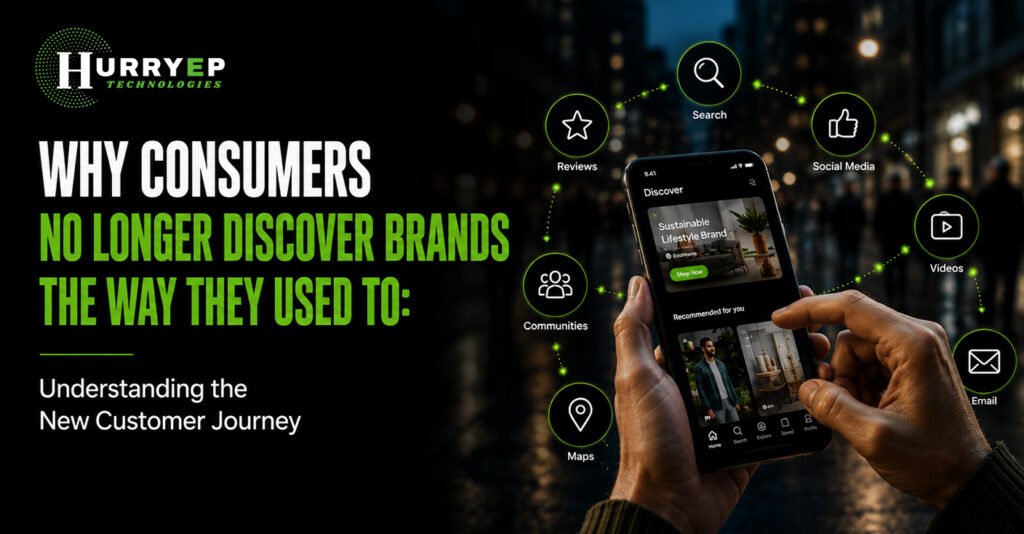
The new customer journey is no longer linear. Consumers move between search engines, social media platforms, websites, online reviews, videos, and community forums before making decisions.
Businesses that maintain a consistent presence across these channels are better positioned to earn visibility and trust throughout the decision-making process.
Another significant shift in consumer discovery is the growing influence of algorithms.
Today, digital platforms increasingly determine what consumers see, read, watch, and purchase. Search engines rank content based on relevance and authority. Social media platforms prioritize content through engagement signals. Streaming services recommend content based on viewing behavior. E-commerce platforms suggest products using personalized data.
Artificial intelligence is accelerating this trend even further.
Modern recommendation systems analyze user preferences, browsing history, location, interests, and behaviors to deliver highly personalized experiences. As a result, consumers are discovering brands through algorithmic recommendations rather than traditional advertising alone.
This shift creates both opportunities and challenges for businesses.
Organizations that produce valuable content, maintain strong digital signals, and invest in visibility strategies are more likely to benefit from algorithmic exposure. Those that neglect their digital presence risk becoming increasingly invisible.
The emergence of AI-powered assistants is introducing another layer of discovery. Consumers are beginning to rely on conversational AI tools to find information, compare solutions, and receive recommendations.
As these technologies continue to evolve, businesses must focus on creating trustworthy, relevant, and accessible digital experiences that align with changing discovery mechanisms.
At Hurryep Technologies, we have observed a consistent trend across industries: consumers are becoming more informed, selective, and research-driven than ever before.
Modern buyers expect instant access to information. They compare alternatives, evaluate credibility, read reviews, and seek validation before making decisions. Businesses that fail to provide relevant digital experiences often struggle to capture attention and build trust.
Several key patterns are shaping contemporary consumer behavior:
Consumers are more likely to engage with businesses that appear consistently across search engines, social platforms, and digital channels. Visibility often influences perceived credibility.
Educational articles, case studies, videos, and thought leadership content play a significant role in helping consumers evaluate brands and solutions.
Attracting visitors is no longer enough. Businesses must understand what consumers are searching for and create content that addresses those specific needs.
For regional businesses, local search visibility remains critical. Consumers frequently search for location-based services such as the best SEO company in Madurai, expecting relevant and trustworthy results.
Consumer discovery patterns will continue to evolve as technology advances. Businesses that embrace change, invest in digital visibility, and prioritize customer-centric experiences will be better equipped for long-term growth.
The era of passive brand discovery is rapidly fading. Today’s consumers actively research, compare, and validate information across multiple digital touchpoints before making decisions.
Search engines, social media platforms, online communities, and AI-powered recommendation systems have transformed how brands are discovered and evaluated. This shift requires businesses to rethink traditional marketing approaches and prioritize visibility, relevance, and trust.
As consumer behavior continues to evolve, the organizations that succeed will be those that understand where discovery happens, how decisions are made, and what consumers expect throughout their journey.
In an increasingly digital world, growth is no longer determined solely by what businesses sell—it is shaped by how effectively consumers can discover them.